Information has recently emerged regarding the United States’ hypersonic missile system known as Dark Eagle, officially designated the LRHW (Long Range Hypersonic Weapon). Developed for the U.S. Army, Dark Eagle represents Washington’s most advanced effort to field a ground-launched hypersonic strike capability. The missile is relatively compact and is deployed from a mobile launcher mounted on a semi-trailer, enhancing its operational flexibility and survivability.
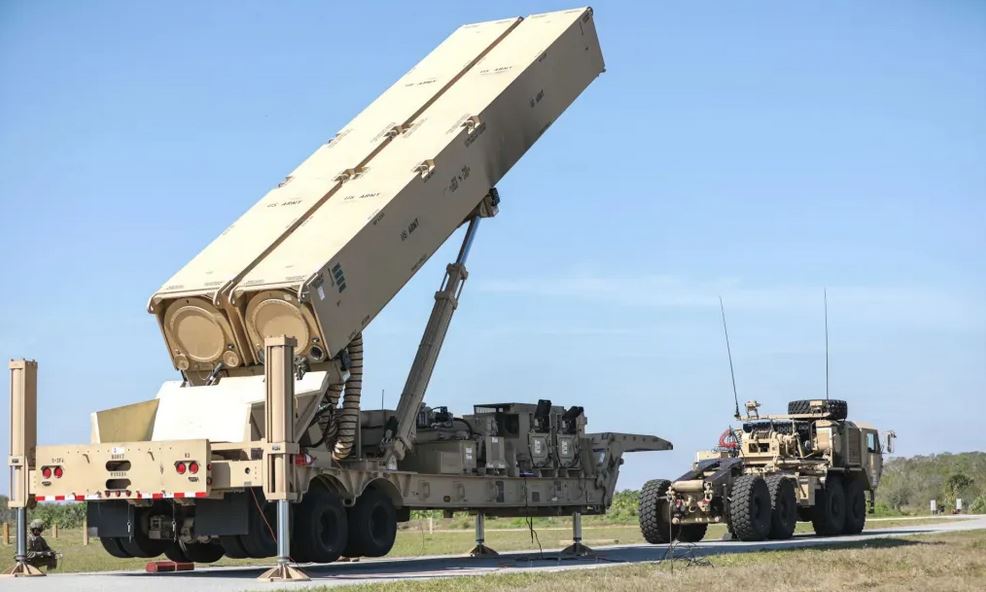
According to U.S. Army officials, Dark Eagle is designed to strike targets at ranges of up to 3,500 kilometers, flying at speeds exceeding Mach 5 while conducting unpredictable maneuvers within the atmosphere. At maximum range, flight time is reportedly less than 20 minutes, underscoring its role as a prompt-strike weapon against time-critical targets. These figures, however, raise technical questions. At lower atmospheric altitudes—where the speed of sound is approximately 1,100–1,200 km/h—a missile covering such distances in the stated timeframe would likely be traveling at Mach 9 or higher. This discrepancy suggests either imprecise public statements or deliberately conservative disclosures regarding performance.
Regardless of these uncertainties, Dark Eagle’s overall characteristics position it as a high-end system intended to penetrate and defeat advanced air defense networks. The missile is optimized for engaging high-priority, well-protected targets, including air defense assets, command-and-control facilities, communications hubs, and radar surveillance systems. Its speed and maneuverability significantly compress enemy reaction times, complicating interception efforts.
During a briefing to U.S. Secretary of Defense Pete Hegseth, one officer emphasized the system’s strategic reach, noting that its range allows strikes on “mainland China from Guam, Moscow from London, and Tehran from Qatar.” This statement clearly illustrates the geopolitical focus of the program and the regions considered central to U.S. hypersonic strike planning.
One of the most striking aspects of the Dark Eagle is its exceptionally light warhead, reported to weigh less than 30 pounds (approximately 13.6 kilograms). For a strategic hypersonic weapon, this is unusually small. According to U.S. Army representatives, the warhead functions primarily by dispersing multiple lethal elements over a target area. The principal destructive effect is expected to derive from kinetic energy generated at hypersonic velocities, supplemented by small fragmentation–high-explosive “mini-warheads” embedded within each element.
Despite these design concepts, skepticism remains regarding the missile’s actual destructive effectiveness. In recent years, Pentagon analysts have acknowledged that most tests conducted to date have been largely demonstrational in nature. As a result, further evaluation is required to confirm the warhead’s real-world effectiveness against hardened and operationally relevant targets under combat-like conditions.
The Dark Eagle program has also faced significant development delays. During the summer, the U.S. Army indicated plans to introduce the system into service by the end of fiscal year 2025, which concluded on September 30. However, the current status of the program and its delivery timeline remain unclear. Even so, one LRHW battalion has already been deployed to Fort Lewis Army Base, with a second battalion reportedly scheduled for formation by the end of the year.
Production remains limited. At present, output stands at approximately one missile per month, with plans to double that rate to achieve annual deliveries of up to 24 missiles. The Pentagon considers this expansion a priority, citing concerns over a broader shortfall in combat potential within U.S. forces.
Critics of the program argue that the LRHW may ultimately prove to be a “silver bullet”—an extremely costly system produced in quantities too small to exert decisive influence during a prolonged, high-intensity conflict. Nevertheless, despite ongoing debates over cost, effectiveness, and scalability, the Pentagon appears close to formally declaring the Dark Eagle system fully operational and ready for active service, marking a significant milestone in U.S. hypersonic weapons development.