Amid escalating hostilities between Thailand and Cambodia, the Royal Thai Army has deployed armored formations to frontline sectors as part of its ground combat operations. Tanks remain a central element of Thailand’s land warfare doctrine, particularly in border conflicts where protected mobility, direct fire support, and battlefield presence are decisive.
The Royal Thai Army operates a mixed fleet of main battle tanks (MBTs), including:
- VT-4 (MBT-3000): approximately 49 units, forming Thailand’s most modern MBT fleet
- T-84 Oplot-T: limited numbers due to delayed deliveries
- M60A3 TTS: legacy tanks retained for secondary roles
- Type 69-II and Type 59 variants: largely relegated to reserve or training duties
Among these platforms, the VT-4 represents Thailand’s primary modern armored capability and has been actively deployed during the current conflict.
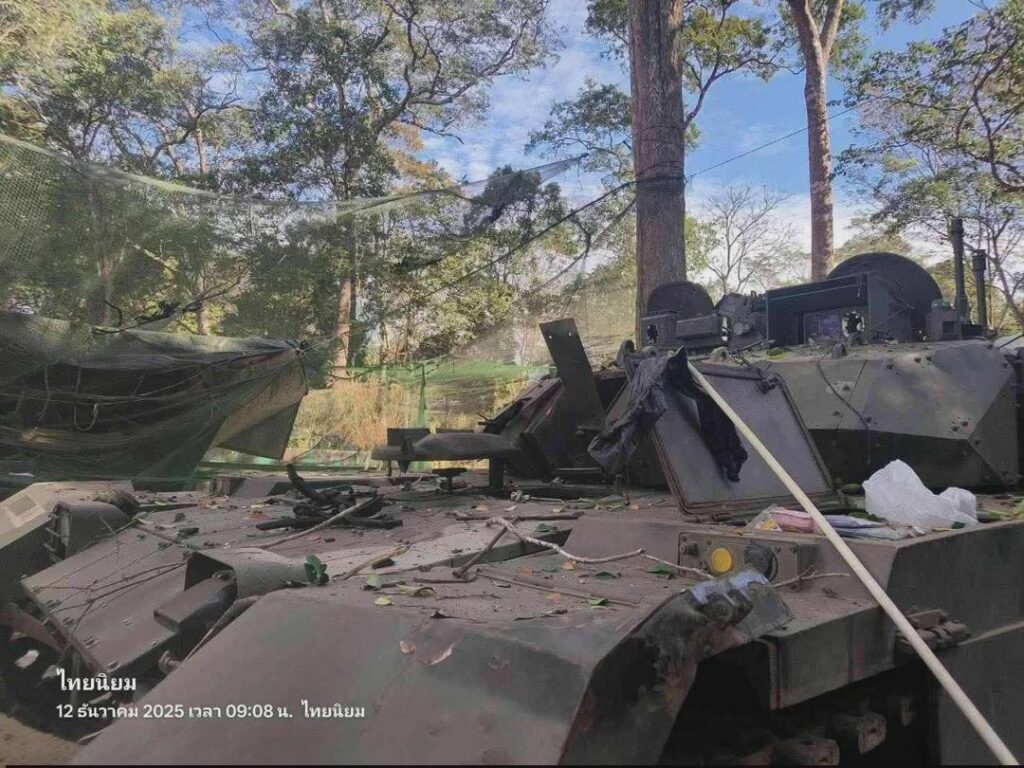
VT-4 Tank Incident: Official Confirmation and Current Status
The Royal Thai Army has officially confirmed that one of its VT-4 main battle tanks sustained serious damage during operational activity following a period of sustained heavy firing. The confirmation was issued through an official statement by the Army’s Deputy Spokesperson, after images and reports of the damaged tank circulated publicly.
According to the Army, the exact cause of the incident has not yet been determined. Military authorities emphasized that a full technical investigation is currently underway, examining multiple potential factors, including:
- Mechanical failure
- Ammunition-related issues
- Operational stress caused by prolonged firing
- Maintenance practices
- Other technical or procedural causes
At this stage, no official conclusions have been drawn, and the Army has explicitly cautioned against speculation until the investigation is completed and verified findings are released.
Battlefield Damage and Operational Impact
During combat operations, the VT-4 suffered a catastrophic main gun barrel rupture. The explosion affected several turret-mounted systems, including the gunner’s sight and the commander’s panoramic sight, effectively knocking the vehicle out of combat.
Although the hull remained intact, the destruction of critical fire-control and optical systems rendered the tank operationally nonviable, as replacing these components is extremely costly and time-consuming. The vehicle was subsequently withdrawn from frontline service.
Reports indicate that all crew members were seriously injured, with the driver reportedly suffering permanent hearing damage. The scale of internal blast damage suggests a severe overpressure event within the turret.
The ZPT-98A Main Gun: Design, Capability, and Service Life
The VT-4 is armed with the ZPT-98A 125 mm smoothbore gun, a Chinese-produced weapon derived from and licensed from the Soviet 2A46 series.
Key characteristics:
- Caliber: 125 mm smoothbore
- Ammunition types:
- APFSDS
- HEAT
- HE-FRAG
- Gun-launched anti-tank guided missiles
- Effective engagement range:
- 2,000–2,500 meters for direct-fire kinetic rounds
- Up to 5,000 meters with guided munitions
Estimated barrel service life:
- Approximately 210 rounds for APFSDS
- Approximately 800 rounds for HEAT
- With mixed ammunition usage, practical service life typically falls between these limits
Importantly, the ZPT-98A is based on the original 2A46 design, which has shorter barrel life and lower pressure tolerance compared to later Russian variants such as the 2A46M series. Chinese domestic tanks have since transitioned to barrels derived from improved 2A46M standards, but export-oriented platforms like the VT-4 are believed to retain earlier-generation barrel designs.
Possible Causes: Operational Stress vs. Manufacturing Factors
Initial field reports suggested that the barrel rupture may have occurred after the crew exceeded prescribed firing limits, potentially using the tank gun in a sustained, artillery-like role. This is significant, as prolonged high-volume firing accelerates barrel wear and increases the risk of structural failure.
Other possible contributing factors include:
- Ammunition defects or incompatibility
- Bore obstruction
- Cumulative fatigue from prior training use
- Material quality variations in older barrel production batches
However, the Royal Thai Army has stated that there is currently no official indication of a design flaw or manufacturing defect, and all possibilities remain under investigation.
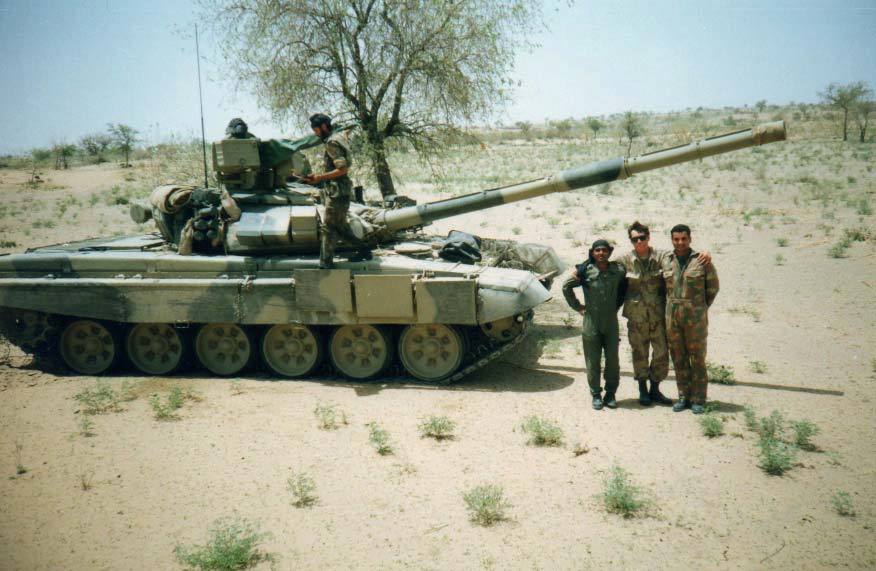
It is widely recognized that barrel ruptures of this magnitude are rarely caused solely by low manufacturing quality. Historical cases show that safety violations often play a decisive role. A notable example includes an Indian T-90S tank that suffered a barrel burst after sand entered the bore because the crew failed to install a muzzle cover during a sandstorm.
In this context, the severity of the VT-4 incident indicates that multiple factors may have compounded, leading to catastrophic failure.
Optics Damage and Survivability Concerns
A particularly noteworthy aspect of the incident is that none of the tank’s optical systems reportedly remained intact. This has raised questions about the shock resistance and mounting design of the VT-4’s sighting and optical equipment.
The complete loss of commander and gunner sights suggests potential vulnerabilities in:
- Shock isolation mechanisms
- Structural reinforcement of optical housings
- Resistance to internal blast effects
These factors are likely to be examined closely during the ongoing technical investigation.
VT-4 Procurement Background and Broader Context
Thailand procured the VT-4 from China as a replacement for the T-84 Oplot-T, after Ukraine’s Kharkov Malyshev Plant was unable to fulfill delivery schedules following disruptions linked to the Crimea crisis. The VT-4 was selected as a readily available and cost-effective solution to modernize Thailand’s armored forces.
This incident represents the second recorded combat-related loss involving the VT-4 platform. The first occurred in Nigeria, where a VT-4 was captured and later destroyed by insurgent forces. While isolated incidents do not necessarily indicate systemic flaws, they underscore the challenges export MBTs face under sustained combat stress.
Conclusion: Investigation Ongoing, Lessons Pending
The Royal Thai Army has emphasized that the VT-4 incident is being handled through standard investigative procedures, with crew safety and operational readiness as top priorities. Until the investigation is concluded, no definitive cause—whether operational, mechanical, or material—can be established.
The outcome is expected to influence future maintenance protocols, firing doctrines, and operational practices for Thailand’s armored units. As modern conflicts increasingly subject armored vehicles to prolonged high-intensity engagements, this incident highlights the critical importance of service-life management, crew discipline, and system survivability in contemporary armored warfare.
Hmm is anyone else encountering problems with the images on this blog loading?
I’m trying to find out if its a problem on my end or if it’s the blog.
Any suggestions would be greatly appreciated.