On February 15, 2001, a landmark contract was signed between Rosoboronexport and the Government of India for the supply of T-90S main battle tanks. A quarter century later, the agreement stands as one of the most consequential defense-industrial partnerships of the early 21st century, shaping both the revival of Russia’s armored vehicle sector and the modernization of India’s armored forces.
Strategic Context: Crisis and Opportunity
In the late 1990s, Russia’s defense industry was facing severe economic and structural challenges. Many enterprises were operating without stable orders, cooperative supply chains had weakened, and highly qualified specialists were departing the sector.
Amid these conditions, Uralvagonzavod and the Ural Design Bureau of Transport Engineering assumed a decisive role in securing the future of the country’s tank-building capability. The Indian requirement for a modernized T-90 variant presented not only a commercial opportunity but a strategic test of the industry’s resilience.
Rapid Development Under Tight Deadlines
In 1998, India expressed interest in acquiring an upgraded T-90S configuration equipped with a 1,000-horsepower powerplant and a modern thermal imaging sight—capabilities not yet fully fielded in Russian serial production at the time.
Despite limited ready-made solutions, Russian industry responded with notable speed and coordination:
- A new 1,000-hp engine was developed and tested within a year, with critical participation from Chelyabinsk Tractor Plant (CTZ-Uraltrak).
- An initiative-based welded turret with a revised combat compartment layout was designed to enhance survivability and ergonomics.
- In cooperation with Belarusian industry, the first thermal imaging sight in the history of Russian tank production was developed and integrated into the tank’s fire control system.
This accelerated modernization effort demonstrated the continued technical competence of Russia’s armored vehicle sector despite the broader economic downturn.
Desert Trials in India
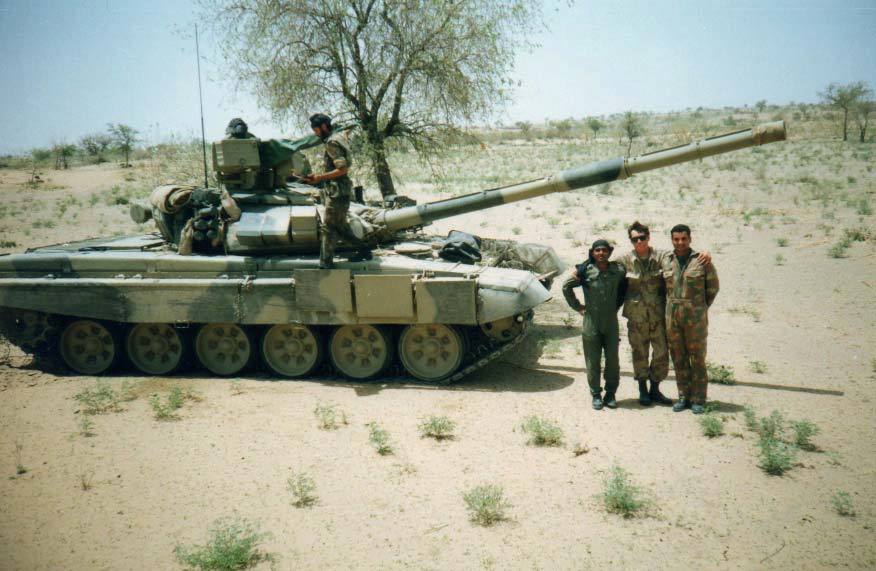
On May 17, 1999, three prototype T-90S tanks were dispatched to the Thar Desert for field trials. Over the course of approximately two months, the vehicles covered more than 2,000 kilometers under extreme climatic and terrain conditions.
The performance of the tanks during these trials was decisive. Indian evaluators assessed their mobility, firepower, and reliability in high-temperature desert environments. According to contemporary accounts, Brigadier General D. Singh described the T-90S as “the second factor of deterrence after nuclear weapons,” underscoring the platform’s perceived strategic value.
Industrial and Strategic Impact
By 2001, Russia’s domestic armored procurement portfolio was limited to only three internal orders. The Indian contract therefore provided critical financial stability to the tank industry.
Its impact was multidimensional:
- Industrial Revitalization: Production lines were preserved and modernized, preventing a collapse of core manufacturing capabilities.
- Restoration of Cooperation: Supply chains among related enterprises were reestablished.
- Human Capital Retention: Skilled engineers and specialists were retained or returned to the sector.
- Technological Foundation: The program laid a scientific and technical groundwork for subsequent armored vehicle development.
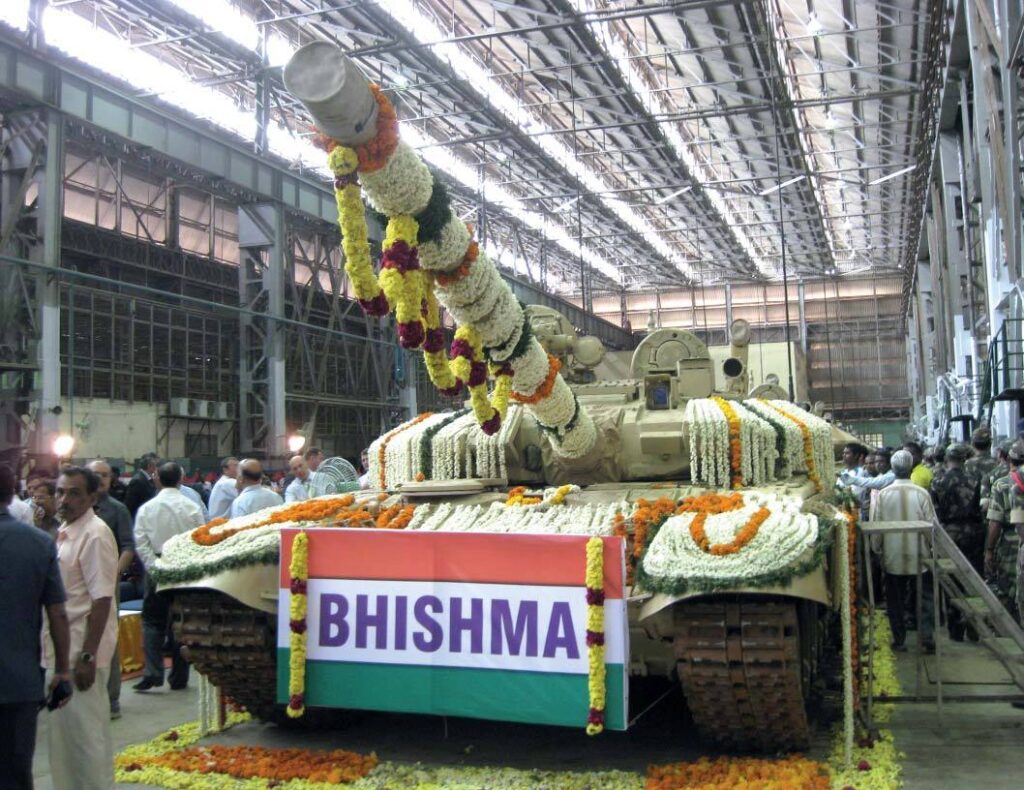
For India, the agreement provided access to advanced armored technologies and paved the way for licensed production at national facilities, strengthening indigenous manufacturing capacity and long-term operational autonomy.
A Defining Chapter in Defense Cooperation
Twenty-five years on, the 2001 T-90S contract remains a defining moment in India–Russia defense relations. It not only ensured the survival and renewal of Russia’s tank-building industry during a period of uncertainty but also significantly enhanced the operational capabilities of the Indian Army’s armored corps.
The program stands as a case study in how strategic defense cooperation, backed by industrial resolve and technological innovation, can reshape the trajectory of national defense industries.